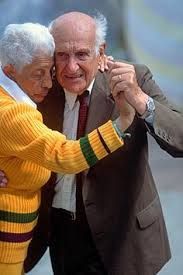
@ango je više nego sam ples, glazba i poezija. Poštuje odnose koji nam dopuštaju da budemo ono što jesmo i podupiru nas u osobnom i društvenom rastu. Gdje se potpuno prikazujemo kao tko smo i dijelimo stvari koje želimo podijeliti iz želje, a ne obaveze ili pridržavanja društvenih skripti. Jedno od najsnažnijih pretraživanja u tangu je potraga za unutarnjom i vanjskom ravnotežom. Sam tango predstavlja ravnotežu.
srijeda, 31. siječnja 2018.
Prvo od šest glavnih područja važnih za kvalitetu života, fizička aktivnost i argentinski tango
utorak, 23. siječnja 2018.
🇭🇷Odnos sa sobom i drugim osobama te argentinskim tangom 🇬🇧Our Relationship with Ourselves, Others, and Argentine Tango
utorak, 16. siječnja 2018.
🇭🇷 Odnos sa sobom i argentinskim tangom/ 🇬🇧Relationship with Oneself and Argentine Tango
🇭🇷 Cijeli tekst na hrvatskom jeziku nalazi se u nastavku, a engleski prijevod čeka vas na dnu stranice.
🇬🇧 The complete Croatian text is below; the English translation awaits you at the bottom of the page
Veliki izazov nije u promjeni zvuka, već je izazov spojiti se s glazbom i stvoriti nešto posebno. Gustavo Adolfo Dudamel Ramír
To je ples koji vam nudi niz odgovora na probleme modernog života ... i to je vodič za komunikaciju koja ide iznad jezika i kulture. Gustavo Naveira.
Tango je put a ne destinacija. Alica Pons.
Tango počinje kada pokret stane. Carlos Gavito.
Tajna tanga je u trenutnu improvizacije između koraka i pokreta. Nemoguće učiniti mogućim: plesati s tišinom. Carlos Gavito
Glazba argentinskog tanga je je glazba cijeloga svijeta. Za njega ne treba putovnica, već osjećaj. Carlos Gavito
🔗Odnos sa sobom i drugim osobama te argentinskim tangom
🇬🇧Relationship with Oneself and Argentine Tango
Expectations and relationship often come as a pair. When these expectations remain unfulfilled, they often lead to disappointment, a loss of the desire to communicate, and eventually even a loss of motivation to master the skill we have chosen to learn. The result is often withdrawal.
What matters most is the “development and creation” of a relationship with oneself and with the thing, activity, or person with whom we have chosen to establish contact. In this case, it is the creative skill of Argentine tango, which encompasses not only dance and music, but also a social phenomenon.
Entering the world of Argentine tango should reflect a need and desire to discover and master a new creative skill while exploring its benefits—benefits that do not arise automatically, but rather through developing one's own relationship with the dance and learning to navigate various situations. The value of these benefits grows as we further develop our relationship with ourselves and with Argentine tango.
A wonderful and strong woman once said how glad she was that she had come to tango without a partner. That way, if he was unable to attend a class, she did not have to stay at home or feel like an extra. She was perfectly comfortable being part of a group in which dancers constantly changed partners, as this allowed her to be fully present in class, to learn, and to develop her own relationship with this beautiful dance, independently of the presence of any particular person.
All of the above are common questions and justifications that can slow down our progress.
Will they come?
Will they be in the mood?
How am I supposed to manage now that this person understands it and is working in a different way?
Do I have the right shoes?
I didn't get enough sleep. I can't “connect” today.
The people around me are nervous.
I don't have a regular partner.
I'm not used to listening.
I need a more advanced group.
I need a different floor...
... ... ...
What is indisputable, beyond doubt, and impossible to refute is that, regardless of all real obstacles (temporary physical limitations) and unreal obstacles (those we impose upon ourselves or that are imposed upon us), we need to become familiar with our bodies and their responses.
Proper body alignment should not be something to fear or something we believe we cannot—or do not want to—master. It is something we need for life itself.
Proper alignment and awareness of our bodies enable better communication with ourselves and with the world around us. They make us not only more present, but also more stable in every sense.
The next step is to develop a relationship with movement. Becoming familiar with movements and with our mental and physical responses to them is already a second step toward a dance in which the movements and body alignment feel completely natural.
By developing our own relationship with ourselves, we become stronger and more open to relationships with others—with people with whom we share and create movement, or simply share a conversation. We become more accepting of differences and learn not to step over obstacles, but to overcome them.
A relationship can be defined as repeated interaction, emotional attachment, and the fulfillment of needs.
At milongas, we encounter people who share their presence, their dance, and their creative expression with us, and during the cortinas, our verbal communication. With them, we travel far, near, or remain right where we are.
Argentine tango itself is music and dance of the entire world. Something truly wonderful. A world within the world, whose secret lies in its mystery.
“The great challenge is not in changing the sound, but in connecting with the music and creating something special.”
— Gustavo Adolfo Dudamel Ramírez
“It is a dance that offers you a range of answers to the problems of modern life ... and it is a guide to communication that goes beyond language and culture.”
— Gustavo Naveira
“Tango is a journey, not a destination.”
— Alicia Pons
“Tango begins when the movement stops.”
— Carlos Gavito
“The secret of tango lies in the moment of improvisation between steps and movements. Making the impossible possible: dancing with silence.”
— Carlos Gavito
“The music of Argentine tango is the music of the whole world. You don't need a passport for it, only feeling.”
— Carlos Gavito
🔗 Our Relationship with Ourselves, Others, and Argentine Tango
Thank you for reading
Thank you for taking the time to read and explore these reflections on Argentine tango, our relationship with ourselves, movement, and others.
If you would like to support the creation of new bilingual original articles, translations, and projects by the Argentine Tango Institute LiberTango, you can support our work via PayPal.
🌞 paypal.me/LibertangoJelena
Your support helps us continue creating, translating, and sharing content dedicated to Argentine tango as dance, music, a creative practice, and a social phenomenon.
🌞 Support LiberTango: paypal.me/LibertangoJelena
📺 YouTube: Tango argentino Libertango Jelena Somogyi
🌐 Website: WWW.LIBERTANGO.EU
📝 Blog: WWW.ARGENTINSKITANGOLIBERTANGO.BLOGSPOT.COM
ponedjeljak, 8. siječnja 2018.
Govornik, predlagatelj i stvaratelj prve ideje pri pokretima u argentinskom tangu
WWW.LIBERTANGO.EU
WWW.TANGOCROATIA.WEEBLY.COM
WWW.ARGENTINSKITANGOLIBERTANGO.BLOGSPOT.COM
YouTube channel - Tango argentino Libertango Jelena Somogyi
petak, 5. siječnja 2018.
🇭🇷 Odličan slušatelj u argentinskom tangu 🇬🇧 An Excellent Listener in Argentine Tango
🇬🇧 An Excellent Listener in Argentine Tango
🇭🇷 Cijeli tekst na hrvatskom jeziku nalazi se u nastavku, a engleski prijevod čeka vas na dnu stranice.
🇬🇧 The complete Croatian text is below; the English translation awaits you at the bottom of the page
🇭🇷 Odličan slušatelj u argentinskom tangu
Zašto često govorimo kako nismo dobar govornik, već da smo dobar slušatelj? Je li biti dobar slušatelj povezano s uvjerenjem kako nas to čini boljom osobom? Isto pitanje postavlja se i u plesu kao što je argentinski tango, koji predstavlja kulturu i umjetnost naroda obgrljenog izričaja plesa, glazbe i poezije te društvenog fenomena. Ujedno postoji i uvriježeno mišljenje kako slušatelj samo sluša te ga stoga nazivamo follower. Slušatelj osluškuje, sluša, prihvaća, nadograđuje izneseno te pruža podršku kao aktivni sudionik.
Osobno smatram kako je ovo uvriježeno mišljenje, budući da neprestano tražimo i očekujemo
priznanje. Stalno očekivanje dovodi nas do nemira te do anksioznosti. Jesam li dobro čula? Je li
poruka jasna? Jesam li dobro reagirala? Sviđa li se moja reakcija i odabir drugoj osobi? Česta
pitanja koja su nam nametnuta i od strane nas samih i od strane okoline. Važno je naglasiti
kako greške u tangu ne predstavljaju greške već novu mogućnost pri kreiranju i razgovoru ili samom slušanju te govorniku daju priliku jasnijeg izražavanja.
Mislimo kako je priznanje lakše dobiti. Kako je ono dovoljno te da nas ono ograđuje od onoga
što ne znamo i ne možemo ..., te kako nas još uvijek ostavlja u tajnosti. Svako slušanje je
obavijeno velom tajanstvenosti, kako u argentinskom tangu, tako i u drugim aspektima našeg života.

Strah prihvaćanja je povezan s strahom od otkrivanja svih naših lica/reakcija koja mogu puno toga reći o nama te od suočavanja s posljedicama skidanja maski – nova akcija. Lica koja bi mogla pokazati naše slabosti te nas dovesti u ranjivo područje. Sam ples uvriježeno predstavlja fizičku predispoziciju. Ples kao vještina se razvija. Svatko ga može svladati i ono najbitnije, dodati mu vlastite začine te čarolije.
Biti dobar slušatelj može biti povezano s pojmom velikodušnosti - davanja vremena nekome. Što je
najdragocjenije. Je li to ono što nas čini dobrom osobom? Dakle, s jedne strane vidimo kako je dobar
slušatelj povezan s osobinom dobre osobe, ali s druge strane nećemo uložiti puno vremena za usavršavanje ove vještine.
Razvijanje vještine slušanja dovodi do razvoja kognitivnih vještina te stvaranja slobodnog prostora i ugode za sve.

"Mala priznata vrijednost slušanja i ispitivanja odnosi se na spoznaju ljudskih odnosa. Često to nisu
činjenice, već ono što ljudi misle da su činjenice, što je zaista važno. Postoji prednost učenja onoga što je nečiji drugi koncept stvarnosti situacije. "(Bryan Bell)

Stvaranje pretpostavki o tome tko bi što morao i kako bi se trebao ponašati može biti frustrirajuće i zamorno.
Otvaranje i stvaranje slobodnog prostora u argentinskom tangu, najstarijem jeziku tjelesne komunikacije koji svi poznajemo, osobito dok smo djeca, kada ga nesvjesno koristimo i razvijamo, prije nego što dođe do svojevrsne industrijalizacije nas samih i naših odnosa, daje bezbroj mogućnosti.
„U argentinskom tangu slušatelj ne sluša samo. Osluškuje, prihvaća, nadograđuje i pruža podršku kao aktivni sudionik.“
— Jelena Somogyi
🇬🇧 An Excellent Listener in Argentine Tango
Why do we often say that we are not good speakers, but rather good listeners? Is being a good listener connected with the belief that this makes us a better person?
The same question arises in a dance such as Argentine tango, which represents the culture and art of a people encompassed by the expression of dance, music, and poetry, as well as a social phenomenon.
At the same time, there is a widespread belief that the listener only listens, and therefore we call them a follower.
The listener tunes in, listens, accepts, builds upon what has been presented, and provides support as an active participant.
Personally, I believe that this is a widespread belief, since we constantly seek and expect recognition. Constant expectation leads us to restlessness and anxiety.
Did I hear correctly? Is the message clear? Did I react correctly? Does the other person like my reaction and choice?
These are frequent questions imposed upon us both by ourselves and by our surroundings.
It is important to emphasize that mistakes in tango do not represent mistakes, but rather a new possibility in creating and conversing, or in listening itself, and they give the speaker an opportunity for clearer expression.
We think that recognition is easier to obtain. That it is sufficient for us and that it shields us from what we do not know and cannot ..., while still leaving us in secrecy.
Every act of listening is shrouded in a veil of mystery, both in Argentine tango and in other aspects of our lives.
The fear of acceptance is connected with the fear of revealing all our faces/reactions, which can say a lot about us, and with facing the consequences of taking off our masks – a new action.
Faces that could show our weaknesses and bring us into a vulnerable area.
The dance itself commonly represents a physical predisposition. Dance as a skill is developed. Anyone can master it and, most importantly, add their own spices and magic to it.
Being a good listener can be connected with the notion of generosity – giving someone time. Which is the most precious thing. Is that what makes us a good person?
Therefore, on the one hand, we see how being a good listener is connected with the quality of being a good person, but on the other hand, we will not invest much time in improving this skill.
Developing the skill of listening leads to the development of cognitive skills and the creation of free space and comfort for everyone.
“The little recognized value of listening and inquiry relates to the understanding of human relationships. Often these are not facts, but what people think are facts, which is what is truly important. There is an advantage in learning what someone else’s concept of the reality of the situation is.” (Bryan Bell)
Creating assumptions about who should do what and how can be frustrating and tiring.
Opening up and creating free space in Argentine tango — the oldest language of bodily communication, a language we all know, especially as children, when we use it unconsciously and develop it further — before the industrialization of ourselves and our relationships, offers countless possibilities.
“In Argentine tango, the listener does not merely listen. They tune in, listen, accept, build upon, and offer support as an active participant.”
— Jelena Somogyi
🇭🇷 Hvala vam na čitanju i plovidbi kroz osjet tijela, slušanje, uzemljenje i prostor bivanja u trenutku sada.
Ukoliko želite podržati stvaranje novih dvojezičnih autorskih tekstova, prijevoda i projekata Instituta argentinskog tanga LiberTango, svoju podršku možete uputiti putem PayPala.
🇬🇧 Thank you for reading and navigating through the awareness of the body, listening, grounding, and the space of being in the present moment.
If you would like to support the creation of new bilingual original texts, translations, and projects by the Argentine Tango Institute LiberTango, you can support us via PayPal.
📺 YouTube channel: Tango argentino Libertango Jelena Somogyi
🌐 Web: WWW.LIBERTANGO.EU
🌐 Web: WWW.TANGOCROATIA.WEEBLY.COM
🇭🇷Pred-misaona inteligencija i Trnoružica somatskog bivanja 🇬🇧 Pre-Reflective Intelligence and the Sleeping Beauty of Somatic Being
🇭🇷Pred-misaona inteligencija i Trnoružica somatskog bivanja 🇬🇧 Pre-Reflective Intelligence and the Sleeping Beauty of Somatic Being 🇭🇷...
-
🇭🇷95. Dobro jutro uz Jelenu i tango: Arhiva mira, knjige i putovi koji se dodiruju 🇬🇧 95. Good Morning with Jelena and Tango: Archive of...
-
🇭🇷 Ples i tehnika / Plesnost i tehnika 🇬🇧 Dance and Technique / Danceability and Technique 🇭🇷 Cijeli tekst na hrvatskom jeziku nalazi...
-
🇭🇷 Između programa i bivanja: 8 faza buđenja kroz tango Inspirirano Donom Oakleyjem 🇬🇧 Between Program and Being: 8 Stages of Awakening...